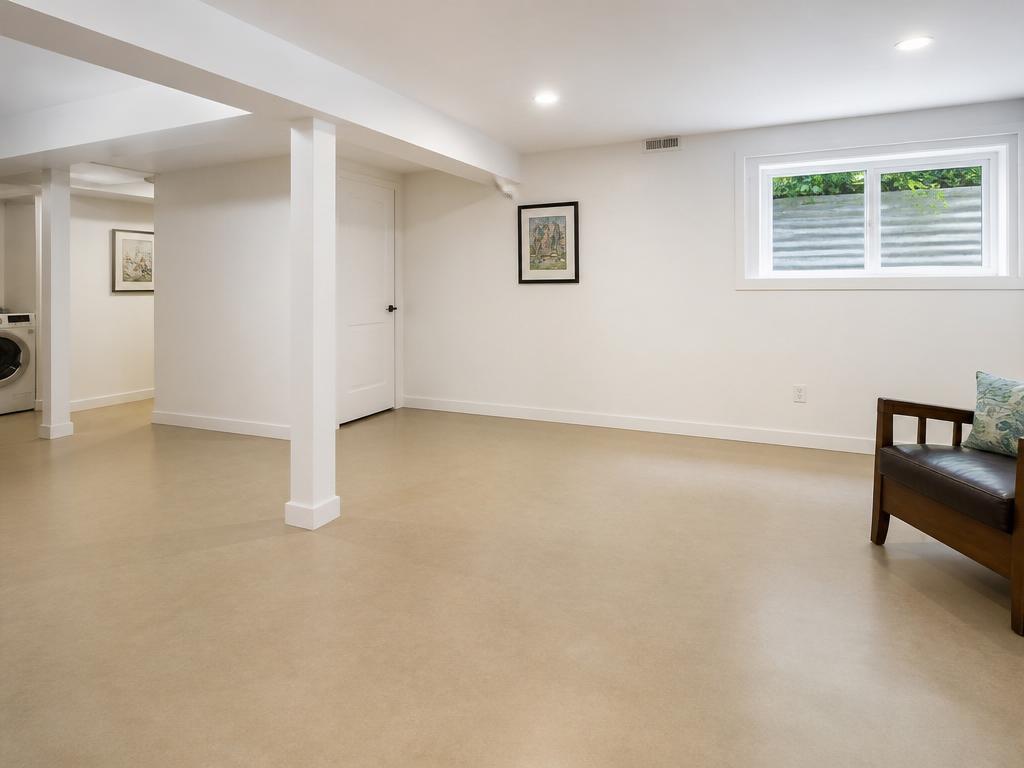
Basements are concrete boxes below the water table's mood. The good news: modern flooring handles them well, as long as you test for moisture first and choose the right material.
Key summary
- Test the slab for moisture before selecting anything.
- Luxury vinyl plank is the default winner for finished basements.
- Tile is bulletproof; carpet is cozy but only over a dry, sealed slab.
- Solid hardwood does not belong below grade.
Start with a moisture test
Concrete releases vapor for years, and Front Range slabs vary lot to lot. A calcium chloride or relative-humidity probe test tells us whether you need a vapor barrier, a moisture-mitigating adhesive, or nothing special. Skipping the test is how good floors fail.
Why LVP dominates down here
Rigid-core LVP is waterproof, warm underfoot compared to tile, quiet with a good pad, and it floats over minor slab imperfections. It also survives the occasional sump or water-heater incident with nothing worse than a wet mop.
When carpet still makes sense
For basement bedrooms and media rooms, carpet over a moisture-rated pad is comfortable and quiet. Choose solution-dyed nylon or polyester for stain resistance, and keep a dehumidifier running in summer.
Have us test your slab
Schmidt Custom Floors has been installing, sanding, and refinishing floors across Loveland, Fort Collins, Greeley, Windsor, and the rest of Northern Colorado since 1968. Book a free in-home estimate and we will measure your space, bring samples to your light, and give you a fixed-price quote with no pressure.